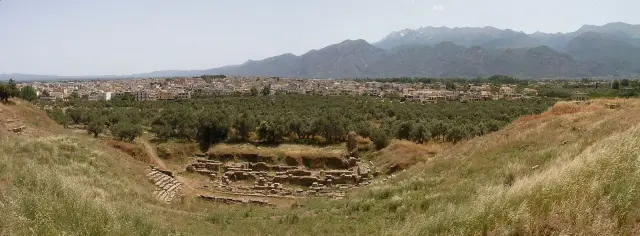
Sparta rewards people who stay the night. A single day is enough for the essentials: Byzantine Mystras in the morning and the ancient city in the afternoon. Two days let you add the hilltop sanctuaries and Mycenaean tombs of the Evrotas valley. With three, you can head up into Taygetos or Parnon, where the villages, springs and monasteries are the part of Laconia most visitors never see.
The plans below assume you have a car, which makes the area much easier to explore. If you don't, see getting around without a car at the end.
Before you start
- Start early. Mystras and the archaeological sites have little shade. In summer, be at the gate when it opens. In winter, most sites close in the middle of the afternoon (Mystras at 15:30 from November to March), so mornings are precious.
- Check museum days. Smaller museums often have short winter hours, and some close one day a week. Each place page has the usual times; the site itself has the final word.
- Wear proper shoes. Mystras is a steep hillside of stone paths and steps, and several ancient sites are on hilltops reached by rough tracks.
- Book a bed in the right place. Sparta town is the most practical base. Mystras village, Parori and Pikoulianika are quieter and put you at the foot of the castle-city. Browse places to stay.
If you have one day
Morning: Mystras, the Byzantine castle-city
Give Mystras the whole morning; three to four hours is about right. This hillside, six kilometres from the centre of Sparta, was the capital of the Byzantine Despotate of the Morea, and its churches, monasteries and palace still stand along the paths that climb from the lower town to the castle at the top. Don't miss the frescoes of the Peribleptos and the Pantanassa monastery, which is still home to a community of nuns, or the view over the whole valley from the castle.
Our practical guide to Mystras covers tickets, opening hours, which gate to use and the best route through the site.
- Mystras (Byzantine castle-city)UNESCO World Heritage castle-city of the 13th-15th centuries: palaces, mansions, gates, monasteries and churches climbing a Taygetos foothill.
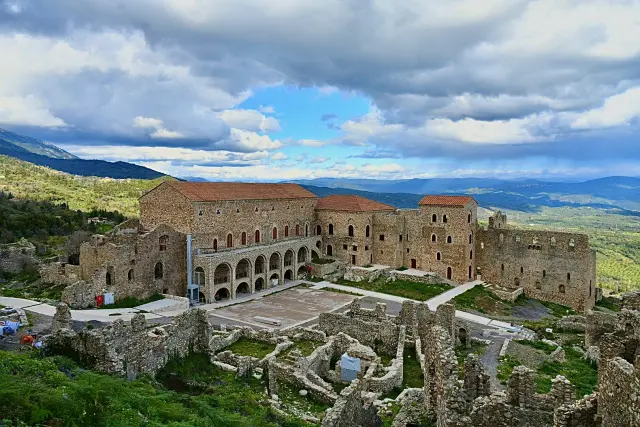 Palace of the DespotsImposing palace of the Kantakouzenos and Palaiologos despots: two wings and a 36 x 10 m Throne Hall with fireplaces and arched windows.
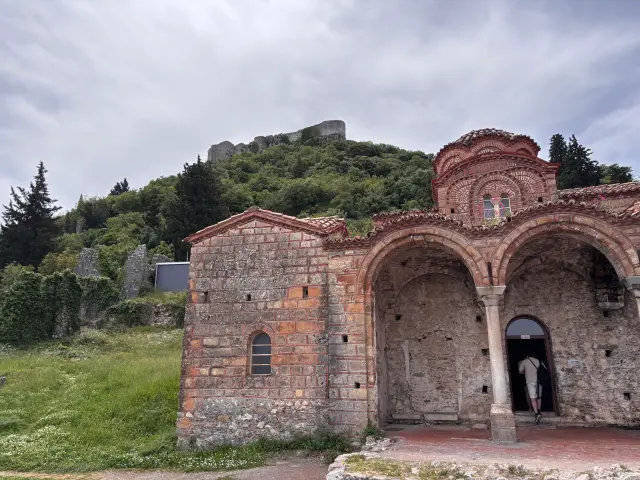 Churches of MystrasSeven major Byzantine churches with exceptional frescoes: Agios Demetrios (Metropolis), Agioi Theodoroi, Hodegetria, Hagia Sophia, Peribleptos and Pantanassa.
- Mystras CastleFrankish-era fortress with Byzantine and Ottoman phases, about 170 m long with two enclosures and a panoramic view of the Laconian valley.
Lunch: under the plane trees
Walk or drive down to Mystras village, or go two minutes further to Parori, where tavernas sit beside a cold spring at the foot of Taygetos. See where to eat for ideas.
Afternoon: ancient Sparta
Drive back into Sparta (fifteen minutes) and start at the Archaeological Museum of Sparta, the first purpose-built provincial museum in Greece, opened in 1874. Its sculpture, mosaics and votive offerings make the ruins outside much easier to picture. If olive oil interests you more, the Museum of the Olive & Greek Olive Oil tells the story of the olive in Greece from prehistory to the modern press.
Late in the afternoon, walk up to the acropolis of ancient Sparta on the northern edge of town. Unlike Athens, Sparta never built grand walls or temples, and its acropolis is a low, quiet hill among olive trees, with a Roman theatre cut into its slope and the outline of the sanctuary of Athena Chalkioikos at the top. On the way, stop at the Leonidaion, the temple-like monument long linked with King Leonidas, and the modern statue of Leonidas near the stadium.
Evening: the main square
Sparta's central square fills up in the evening, especially at weekends. Have a drink at one of the cafés around it, then dinner in town.
If you have two days
Follow the one-day plan on day one, then spend day two on the older, quieter sites of the Evrotas valley. They are spread around the edges of the town, a few minutes apart by car.
Morning: Artemis Orthia and the Menelaion
Begin at the Sanctuary of Artemis Orthia on the eastern edge of town, beside the Evrotas. This was one of the most important sanctuaries of ancient Sparta, closely tied to the harsh upbringing of Spartan boys.
Then cross the river to the Menelaion, a sanctuary to Menelaus and Helen on a hill above the eastern bank. The short walk up is rewarded with one of the best views in Laconia: the whole valley at your feet and the long wall of Taygetos behind Sparta.
Midday: Amyklaion and the Vafeio tomb
Drive south to Amykles and the Amyklaion, the sanctuary of Apollo on the hill of Agia Kyriaki, where Spartans held the festival of the Hyacinthia. Nearby, in an olive grove, the Vafeio tomb is a Mycenaean tholos of around 1500 BC, more than ten metres across.
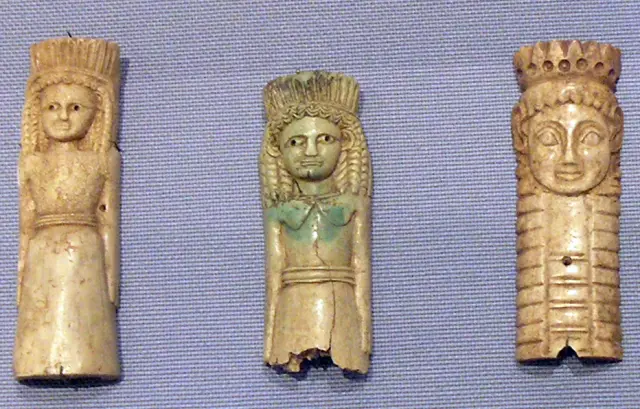 Sanctuary of Artemis OrthiaMajor Spartan sanctuary from the 9th century BC, central to the training of Spartan youth and its famous ritual whipping.
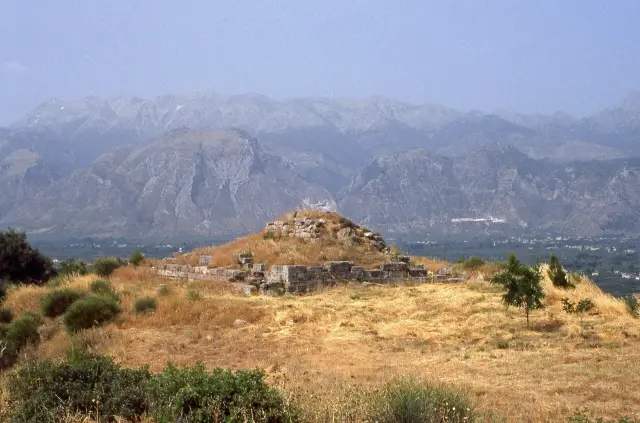 MenelaionSanctuary of the deified Menelaus and Helen, one of the most important Mycenaean sites of Laconia, with sweeping views of the valley and Taygetos.
- AmyklaionSanctuary of Apollo with a colossal statue and archaic 'throne' of the 6th century BC; host of Sparta's Hyacinthia festival.
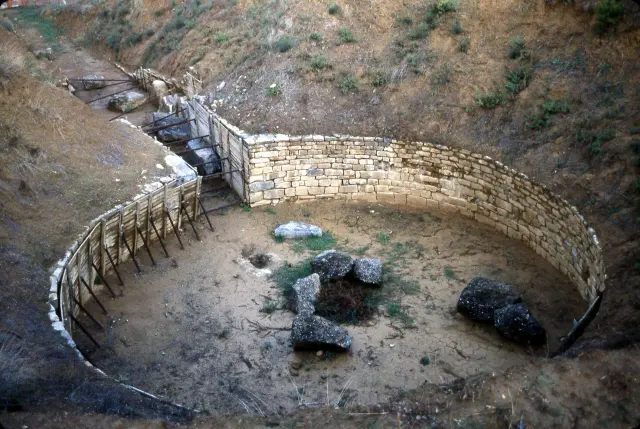 Vafeio vaulted tombMycenaean tholos tomb of around 1500 BC, 10.2 m across, the largest in Laconia, where the famous gold 'Vafeio Cups' were found.
Afternoon: Xirokampi
Continue to Xirokampi, a large village of stone houses and tavernas by the river, for a late lunch. Afterwards, see the Roman-era bridge of Rasina just outside the village and, if you still have energy, drive up to the Monastery of Zerbitsa on the plateau above.
If you have three days
On the third day, choose a mountain. Taygetos rises right behind the town, while the Parnon villages are thirty minutes to an hour away. Both are cooler than the valley in summer.
Option 1: Taygetos, west of Sparta
Take the road towards Kalamata, which climbs into the Langada gorge. Stop at Trypi, a village of springs at the entrance of the gorge, and at the Kaiadas, the chasm where, according to ancient writers, Spartans threw condemned prisoners. In summer, continue to the clear pools of the Knakion springs for a swim. Walkers can instead drive up to Anavryti, a mountain village on the E4 European long-distance path, and walk a section of it.
Option 2: Parnon, east of Sparta
Head east to Chrysafa and its frescoed church of Panagia Chrysafitissa, then visit the Monastery of the Forty Martyrs nearby. Continue up to the Monastery of Agioi Anargyroi, founded in 881 and full of wall paintings, and finish in the fir forests around Vamvakou or Karyes.
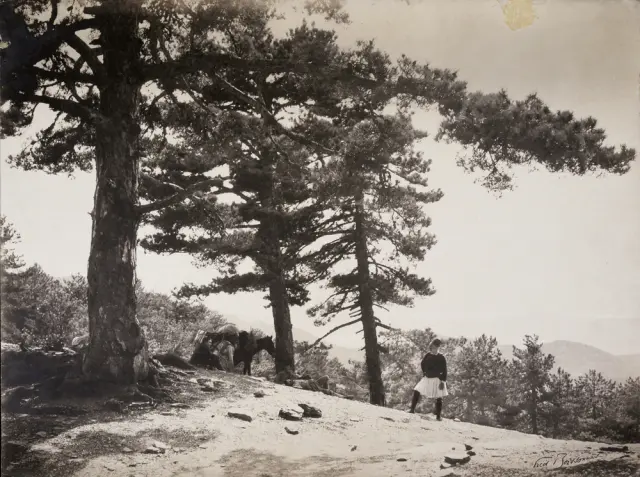 TrypiAmphitheatrical mountain village with springs (Vasiloneri, Karvasaras) and traditional tavernas, near Kaiadas and the Lagada climbing park.
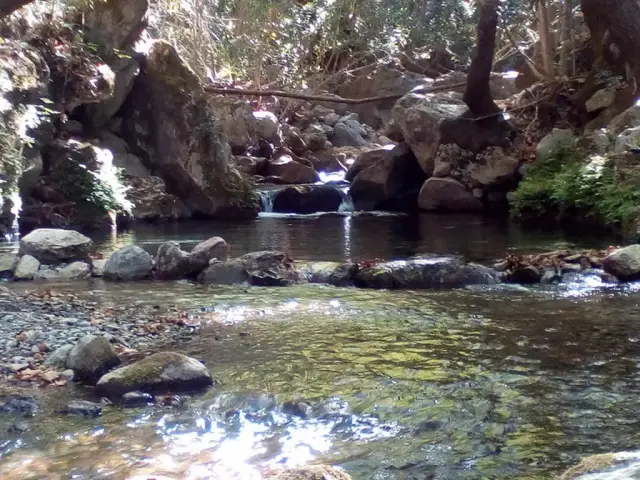 Knakion springsNatural swimming spot of crystal-clear ponds and diving pools in green woodland, with riverside walks.
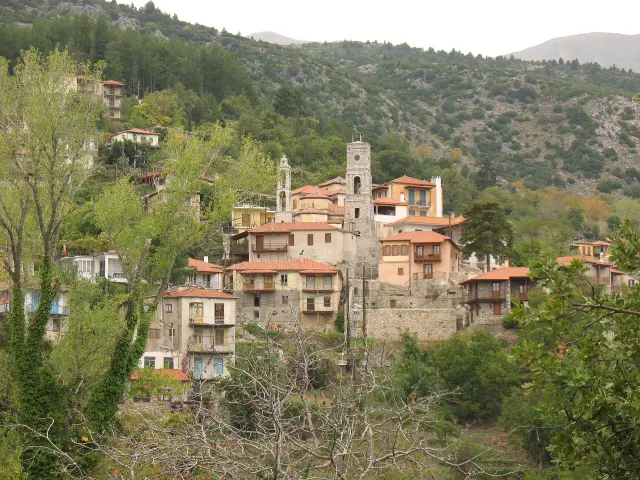 AnavrytiMountain village loved by outdoor enthusiasts, on the European E4 path with many side trails to peaks and gorges.
- Monastery of Agioi AnargyroiFounded 881 AD; cross-in-square church with over 100 frescoes by the Kakavas family and a 1711 wooden iconostasis.
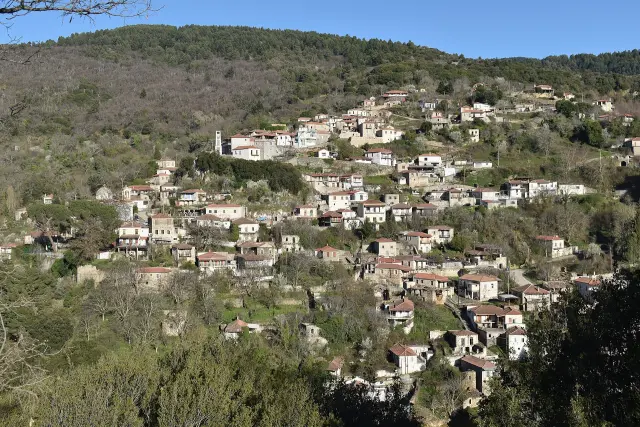 Vamvakou15th-century mountain village surrounded by fir and black-pine forests, with a clock tower and panoramic square.
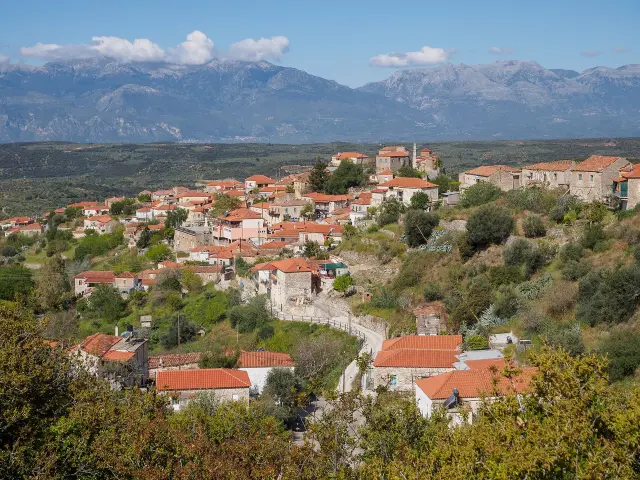 ChrysafaMountain village of Byzantine and post-Byzantine churches, home to the 11th-century fortress church of Panagia Chrysafitissa.
When to go
Spring (April to June) is the best time for most visitors: green hills, wild flowers, snow still on Taygetos and comfortable walking weather. Autumn (late September to November) is almost as good, with warm days, the olive harvest beginning and the chestnut and walnut trees turning gold in the villages. July and August are very hot in the valley, often well above 30°C, so plan your sightseeing for the early morning and spend the afternoon in the mountains or by a spring. Winter is mild in Sparta and quiet everywhere; sites close earlier and some mountain roads can see snow.
Getting around
A car is by far the easiest way to see the area, and it is essential for the villages and monasteries. Roads are generally good, but mountain roads are narrow and winding, so allow more time than the map suggests.
Without a car, base yourself in Sparta town. You can walk to the museums, the acropolis and the sanctuary of Artemis Orthia, and take a taxi to Mystras (a short ride; see the Mystras guide). Local buses run to some villages, but not often, so check the timetable a day ahead. For the journey from Athens, read how to get from Athens to Sparta.